Chloride Process TiO2

Last Edited: March 25, 2026
पेंट, प्लास्टिक और टेक्सटाइल उद्योग के लिए क्लोराइड प्रक्रिया TiO2 उत्पादन आरेख।

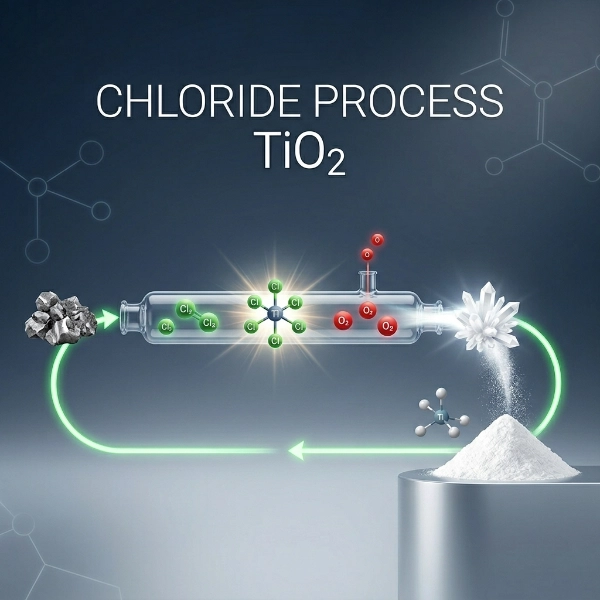
Chloride Process TiO₂ uses high-temperature vapor-phase oxidation for premium rutile pigments. Unlike the sulfate method, precise TiCl₄ distillation eliminates impurities like iron and manganese. This ensures high-purity titanium dioxide with a distinct blue undertone, superior brightness, and narrow particle size distribution for maximum opacity.

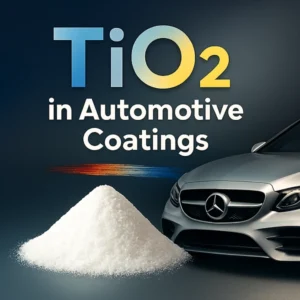
Engineered for demanding environments, chloride rutile TiO2 offers excellent weather resistance and dispersibility. Its stable crystal structure ensures durability in automotive coatings, industrial plastics, and high-end inks, produced under strict quality control requirements.

Chloride Process TiO₂ uses high-temperature vapor-phase oxidation for premium rutile pigments. Unlike the sulfate method, precise TiCl₄ distillation eliminates impurities like iron and manganese. This ensures high-purity titanium dioxide with a distinct blue undertone, superior brightness, and narrow particle size distribution for maximum opacity.

Engineered for demanding environments, chloride rutile TiO2 offers excellent weather resistance and dispersibility. Its stable crystal structure ensures durability in automotive coatings, industrial plastics, and high-end inks, produced under strict quality control requirements.

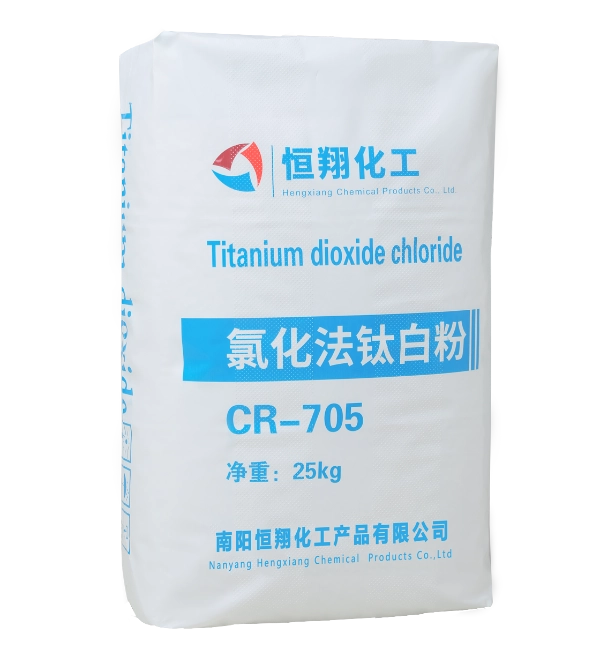
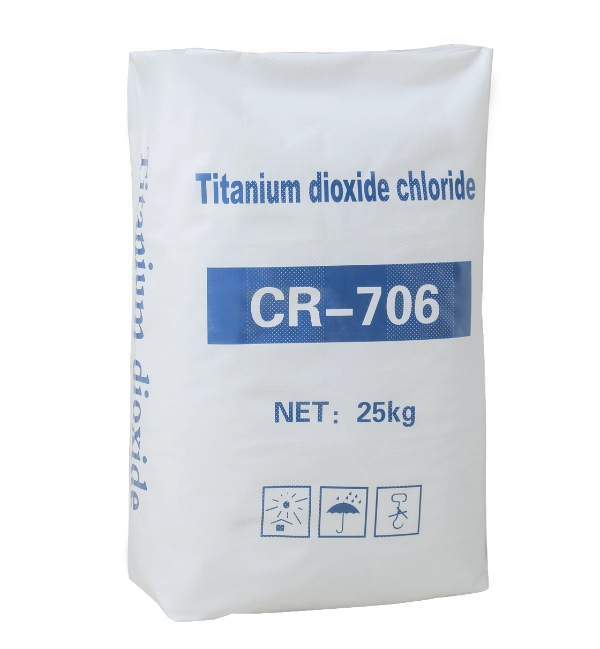
Industrial packaging of CR705 Titanium Dioxide pigment, chloride process rutile grade, 25kg bag

Rutile Titanium Dioxide CR705

CR705 is a chloride-process titanium dioxide TiO2 with blue undertone, high brightness, and excellent weather resistance. Versatile for paints, coatings, inks, road pavement markings and plastics—including architectural finishes, automotive OEM, industrial anti-corrosion coatings, gravure and offset inks, engineering plastics, TiO2 masterbatch applications, and titanium dioxide for masterbatch solutions.

Read MoreRutile Titanium Dioxide CR705

Application Uses

What is titanium dioxide used for?

What is titanium dioxide used for?

Titanium dioxide is mainly used as a white pigment to make products brighter, more opaque, and durable. You’ll find it in paints, plastics, paper, inks, and textiles, where it helps improve whiteness and appearance. It’s also common in packaging, cosmetics, and other applications that require UV protection.

Performance & Properties

Does titanium dioxide react with chlorine?

Does titanium dioxide react with chlorine?

No. Titanium dioxide is chemically stable and does not react with chlorine under normal conditions. Chlorine is only involved in the chloride production process, where titanium ores are converted into titanium tetrachloride (TiCl₄) and then oxidized to form TiO₂. Once produced, TiO2 is inert and stays stable in everyday use.

Other Related Questions

What is the chloride process of TiO2?

What is the chloride process of TiO2?

The chloride process is a modern way to make titanium dioxide. Titanium ores like ilmenite or rutile are treated with chlorine at high temperatures to form titanium tetrachloride (TiCl₄), which is then purified and oxidized into TiO₂. Compared with the sulfate process, this method produces a purer pigment and is generally considered more environmentally friendly.