Plastic Masterbatch

Titanium Dioxide for Masterbatch, TiO2 Masterbatch, Titanium Dioxide Used in Plastic, PP master batch

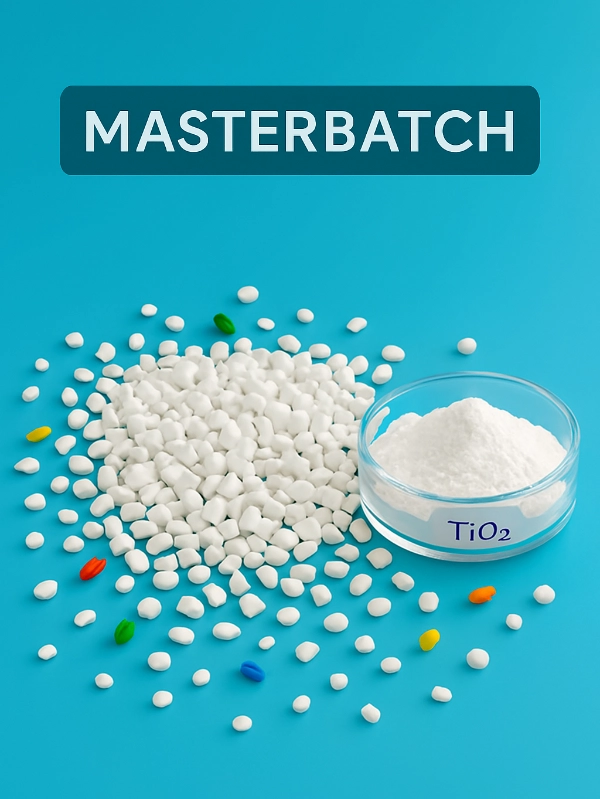
Plastic masterbatch is a concentrated mixture of pigments, titanium dioxide, and functional additives dispersed in a polymer carrier. TiO2 masterbatch is used in film blowing, injection molding, and extrusion to enhance color strength, opacity, and UV resistance.

Resin systems vary by application: polyolefins (PE, PP) for films, pipes, and molded products; engineering polymers such as ABS, PC, PA, and PBT for automotive and electronic components; and PET for bottles, packaging, and fibers requiring clarity and food‑contact performance.

In white formulations, TiO2 provides high whiteness, uniform dispersion, and thermal stability for packaging, household goods, automotive parts, and engineering plastics.

Plastic masterbatch is a concentrated mixture of pigments, titanium dioxide, and functional additives dispersed in a polymer carrier. TiO2 masterbatch is used in film blowing, injection molding, and extrusion to enhance color strength, opacity, and UV resistance.

Resin systems vary by application: polyolefins (PE, PP) for films, pipes, and molded products; engineering polymers such as ABS, PC, PA, and PBT for automotive and electronic components; and PET for bottles, packaging, and fibers requiring clarity and food‑contact performance.

In white formulations, TiO2 provides high whiteness, uniform dispersion, and thermal stability for packaging, household goods, automotive parts, and engineering plastics.

ha100 titanium dioxide anatase tio2

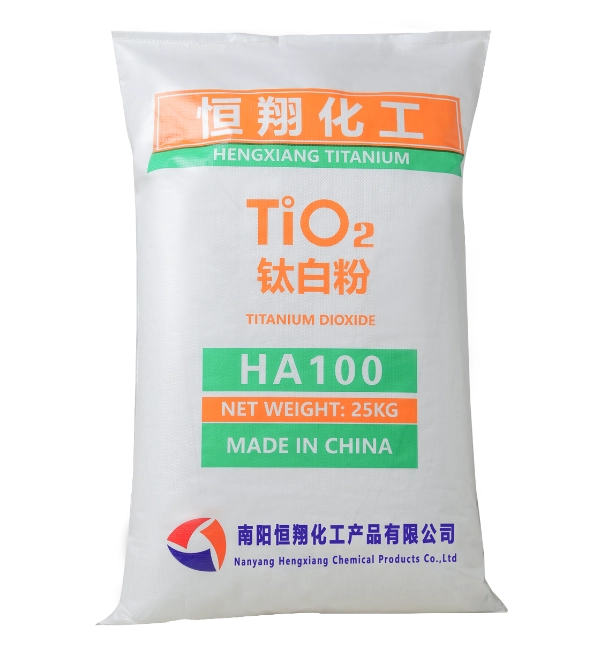
Anatase Titanium Dioxide HA100

HA-100 is an anatase titanium dioxide pigment produced by the sulfate process. It features high purity, a well-controlled particle size distribution, high whiteness, reliable hiding power, and excellent dispersion. The product is suitable for interior wall coatings & paint, indoor plastic pipes and films, indoor-use TiO2 masterbatch, textiles, paper, rubber products, and titanate production.
Read MoreAnatase Titanium Dioxide HA100
China Titanium Dioxide Producer Sulfate Process TiO2 Anatase HA120

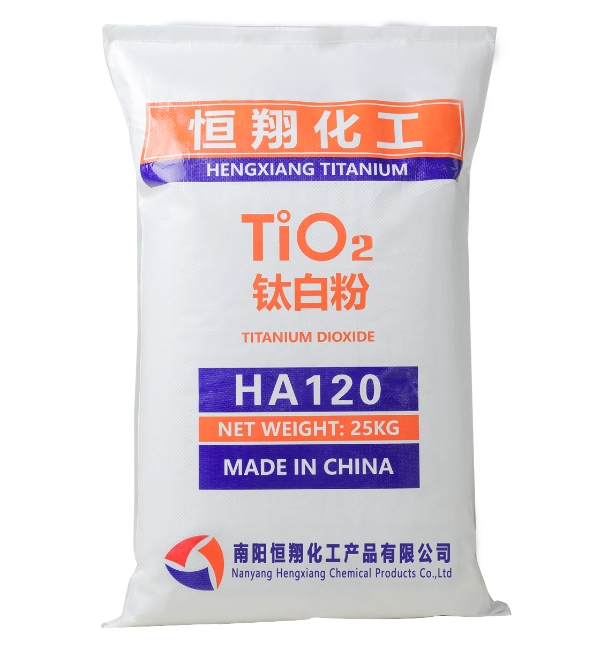
Anatase Titanium Dioxide HA120 TiO2

HA-120 is a general-purpose anatase titanium dioxide TiO2 with excellent whiteness, high hiding power, gloss, and dispersibility. Featuring low oil absorption and strong weather resistance, it’s mainly used in interior-use paint coatings, indoor plastic pipes & films, textiles, rubber, leather, paper, titanate preparation, and titanium dioxide masterbatch applications.

Read MoreAnatase Titanium Dioxide HA120 TiO2
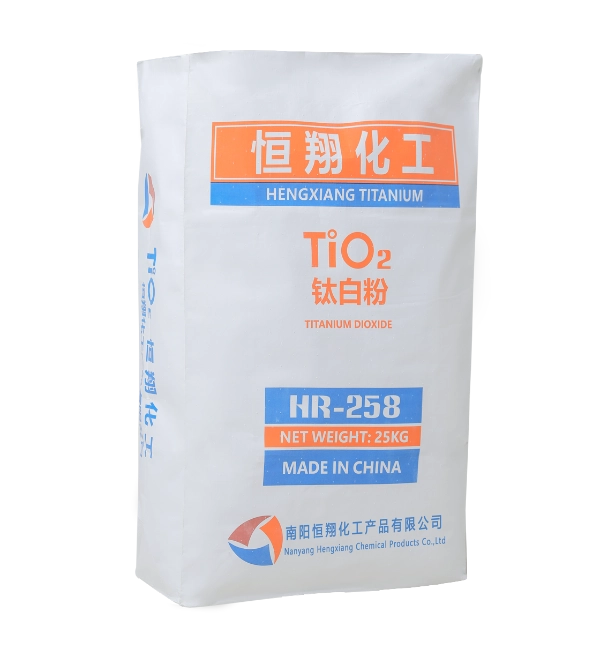
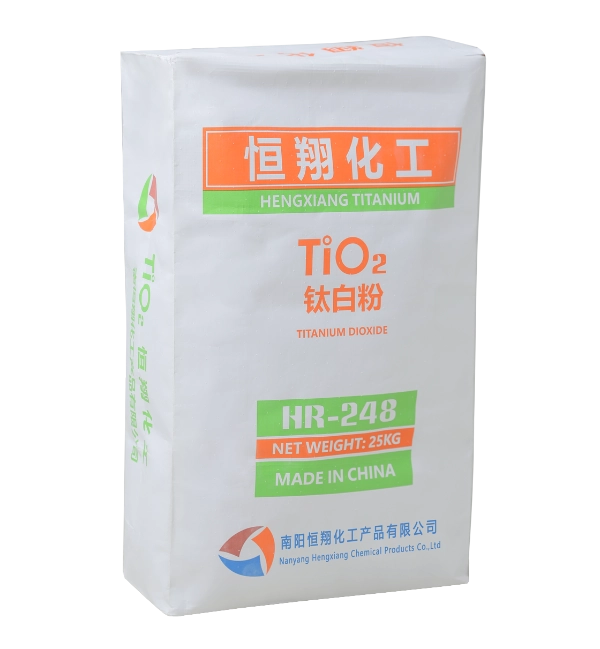
25kg Industrial bag of Titanium Dioxide Rutile Grade, Sulfate Process TiO2, China HengXiang Titanium

Rutile Titanium Dioxide HR248

Titanium Dioxide HR-248 is a sulfate-process rutile grade with fine particle size and high gloss, produced using imported sand mills for wet grinding. Surface-treated with dense alumina and silica, it delivers excellent weather resistance and durability.

HR-248 is widely used in PVC, coatings, etching inks, paper, road marking lines, and especially in masterbatch applications. As a high-performance titanium dioxide for masterbatch, it ensures strong hiding power, brightness, and dispersion. This makes it an ideal choice for titanium dioxide masterbatch (TiO₂ masterbatch) formulations requiring consistent quality and long-term stability.

Read MoreRutile Titanium Dioxide HR248
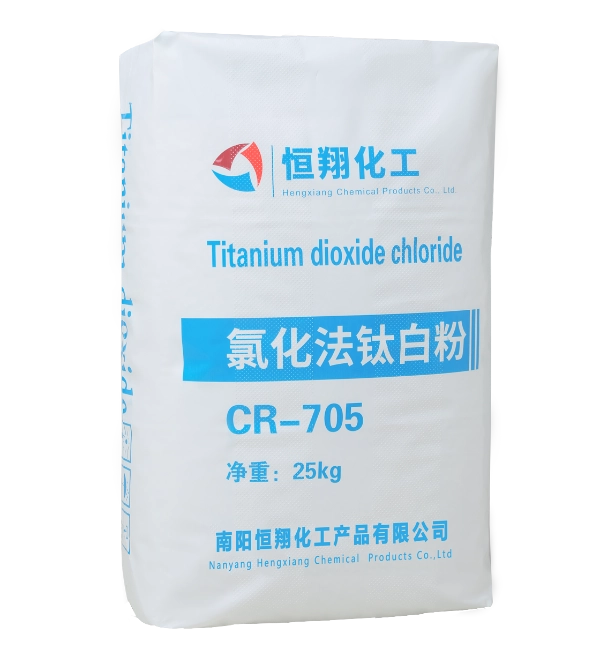
Industrial packaging of CR705 Titanium Dioxide pigment, chloride process rutile grade, 25kg bag

Rutile Titanium Dioxide CR705

CR705 is a chloride-process titanium dioxide TiO2 with blue undertone, high brightness, and excellent weather resistance. Versatile for paints, coatings, inks, road pavement markings and plastics—including architectural finishes, automotive OEM, industrial anti-corrosion coatings, gravure and offset inks, engineering plastics, TiO2 masterbatch applications, and titanium dioxide for masterbatch solutions.

Read MoreRutile Titanium Dioxide CR705

Application Uses

What is TiO2 used for in polymers?

What is TiO2 used for in polymers?

Titanium dioxide is widely used in polymers as a white pigment and performance booster. It gives plastics a bright, opaque appearance and helps protect them from sunlight by blocking UV radiation. This improves color stability, prevents yellowing, and extends the life of polymer products. TiO2 is found in everyday items such as packaging, films, pipes, and window profiles, where both appearance and durability are important.

What is the use of titanium dioxide in plastic?

What is titanium dioxide used for in plastic?

Titanium dioxide is added to plastics to give them whiteness, opacity, and brightness. It also improves UV resistance and weatherability, helping materials keep their color and strength over time. Common applications include PVC, PE, PP, PS, PET, ABS, PC, PA, PBT, and SAN, as well as plastic masterbatch, where TiO₂ enhances appearance, prevents degradation, and extends product life in packaging, construction, automotive, and consumer goods.

What is the role of titanium dioxide in coatings?

What is the role of titanium dioxide in coatings?

Titanium dioxide is used in coatings to provide whiteness, opacity, and brightness. It delivers strong hiding power, improves UV resistance and durability, and helps coatings keep their color over time. TiO2 is essential in architectural, industrial, automotive, and protective coatings where long‑lasting appearance and performance are required.

Health & Safety

Why was titanium dioxide banned?

Why was titanium dioxide banned?

Titanium dioxide has not been banned globally. The restriction applies only to food‑grade titanium dioxide (E171) in the European Union. In 2022, the EU adopted a precautionary ban after its food safety authority concluded that the long‑term effects of ingesting very small TiO2 particles could not be fully ruled out.

This action was based on uncertainty rather than proof of harm. Other regions — including the United States, Canada, Australia, and Japan — continue to allow E171 in food when used within established safety limits.

The EU’s decision is specific to food use. Titanium dioxide used in coatings, plastics, inks, cosmetics, and other non‑food applications remains widely approved and is considered safe because it is embedded in solid materials and not ingested.

Is titanium dioxide no longer safe?

Is titanium dioxide no longer safe?

Titanium dioxide is still considered safe in most of its common uses, including coatings, plastics, inks, and cosmetics. The recent concerns mainly involve food‑grade titanium dioxide (E171), where different regions have taken different regulatory approaches.

The European Union chose to restrict E171 in food as a precaution, while countries such as the United States, Canada, Australia, and Japan continue to allow it within established safety limits. These differences reflect policy choices rather than a global scientific consensus.

In non‑food applications, where titanium dioxide is locked into a solid matrix, it remains widely approved and is not considered a health risk. Overall, there is no evidence that titanium dioxide is broadly unsafe; the discussion is specific to food use and varies by region.

Other Related Questions

What are the three types of TiO2?

What are the three forms of TiO2?

There are three main types of titanium dioxide (TiO2) based on crystal structure: rutile, anatase, and brookite.

Rutile TiO2 is the most stable and the most widely used form, commonly found in coatings, plastics, inks, and masterbatches due to its excellent opacity and durability.

Anatase TiO2 is less stable but known for its photocatalytic properties, making it suitable for photocatalysis, paper, and specialty applications.

Brookite TiO2 is the least common form and is rarely used in commercial products, appearing mainly in laboratory and research settings.

All three share the same chemical composition, but their crystal structures give them different properties. In practice, rutile dominates industrial use, anatase serves functional applications, and brookite is largely limited to research.